
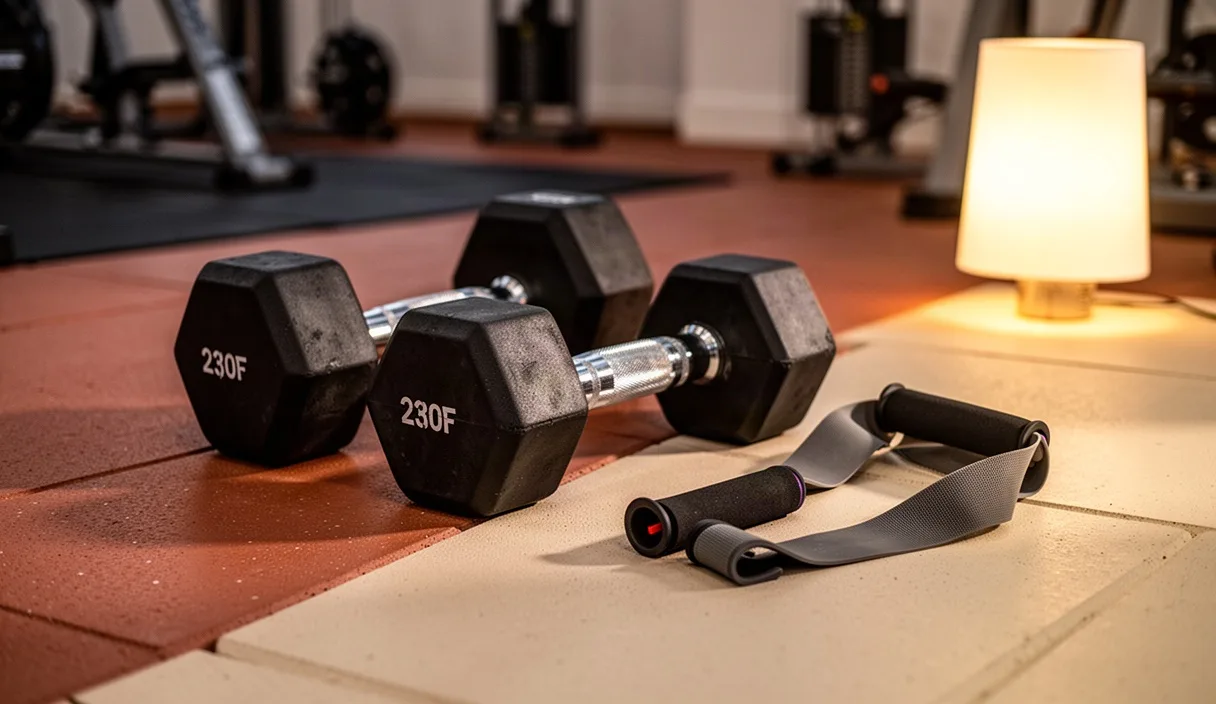

After 40, the body stops offering strength for free. Muscle mass declines by roughly 3 to 8 percent per decade starting around age 30, and that rate accelerates after 60 if nothing interrupts it. The good news is that resistance training reliably slows and partly reverses this process at any age it's started, including the first time someone picks up a dumbbell at 45 or 55. The bad news is that most injuries in new lifters over 40 come not from lifting too much, but from lifting carelessly: skipping warm-ups, copying a 25-year-old's program, or trying to "catch up" in the first two weeks.
This guide lays out a practical, injury-aware path into strength training for adults starting later or starting over. It covers how to pick a safe starting load, how to structure a beginner week, which form habits prevent the most common injuries, how to tell soreness from a warning sign, and how to add weight over the first three months without wrecking a joint. None of this replaces a conversation with a physician or physical therapist, especially if there's an existing injury, heart condition, or joint replacement, but it gives a concrete framework to bring into that conversation.
Why strength training matters more, not less, after 40
Sarcopenia, the age-related loss of muscle mass and strength, isn't a vague risk reserved for old age. Research tracking adults over decades shows measurable strength decline beginning as early as the late 30s, with grip strength and leg power often dropping before most people notice any change in daily function. Strength training is the single most direct countermeasure, because it's the main stimulus that tells the body to keep or rebuild muscle tissue rather than let it go.
Bone density follows a similar pattern. Women in particular face accelerated bone loss after menopause, and weight-bearing resistance work, especially moves that load the spine and hips like squats and deadlifts done with appropriate weight, is one of the few interventions shown to help maintain bone mineral density. This doesn't mean a 42-year-old needs to deadlift twice her bodyweight; it means the stimulus of progressively loading bones and muscles has a protective effect that walking or stretching alone doesn't provide.
There's also a practical, everyday argument. Carrying groceries, getting off the floor, climbing stairs with a bag, catching yourself if you trip, these all depend on strength reserves that most adults stop building after their 20s unless they train for it. Waiting until 60 or 70 to start means training against a steeper decline. Starting at 40 or 45 means training with more tissue quality and joint resilience still in the bank.
Choosing a starting load without guessing
The most common mistake isn't choosing a weight that's too heavy, it's choosing one based on ego or guesswork rather than a simple test. A practical method: pick a weight for a given exercise, like a goblet squat or a dumbbell row, and perform it for 10 to 12 repetitions. If the last 2 reps feel genuinely difficult but form stays clean, that's a reasonable starting point. If you could do 20 reps without strain, it's too light to build strength efficiently; if you can't complete 8 with good form, it's too heavy to start with.
For most new lifters over 40, starting with bodyweight or light dumbbells (5 to 15 pounds for upper body movements, 10 to 25 pounds for lower body movements) for the first one to two weeks is not overly conservative, it's standard practice. The first weeks aren't primarily about muscle growth, they're about teaching joints and connective tissue to tolerate load and teaching the nervous system the movement pattern.
A simple reference for the first testing session:
| Exercise | Typical starting load | Target reps |
|---|---|---|
| Goblet squat | 10 to 20 lb dumbbell or kettlebell | 10 to 12 |
| Dumbbell row | 8 to 15 lb per hand | 10 to 12 |
| Push-up (knee or standard) | bodyweight | 6 to 12 |
| Dumbbell deadlift | 15 to 30 lb per hand | 8 to 10 |
| Standing shoulder press | 5 to 10 lb per hand | 10 to 12 |
These numbers are starting ranges, not targets to defend. Someone who already does manual labor or plays recreational sports may start higher; someone returning after years of inactivity or recovering from an injury should start at the lower end, or below it, and a physical therapist can help set a safer baseline if there's any joint history to account for.
A beginner weekly structure: frequency and rest
Two to three full-body sessions per week, with at least one rest day between them, is the structure most strength coaches and the current American College of Sports Medicine guidelines recommend for new lifters of any age. Full-body sessions, rather than splitting muscle groups by day, mean each major movement pattern, squat, hinge, push, pull, carry, gets trained multiple times weekly, which builds competence faster than once-weekly isolated sessions.
A realistic week for someone starting at 40-plus:
- Monday: full-body session, 5 exercises, 2 sets each
- Tuesday: rest or light walking
- Wednesday: full-body session, same or similar exercises
- Thursday: rest or mobility work
- Friday: full-body session
- Saturday/Sunday: rest, light activity optional
Rest between sets matters more than many new lifters assume. For strength-focused work, 60 to 90 seconds between sets is typical; going shorter turns the session into a conditioning workout, which isn't the goal in the first months. Rest between sessions matters just as much: muscle and connective tissue adapt during recovery, not during the workout itself, and adults over 40 generally need slightly longer recovery windows than someone in their 20s doing the identical program.
Form cues that prevent common injuries
Most strength training injuries in new lifters over 40 cluster around a handful of joints: the lower back during hip-hinge movements, the shoulder during overhead pressing, and the knee during squatting with poor tracking. Each has a specific, well-documented fix rather than a vague "be careful."
For the lower back during deadlifts or hinges, the cue that matters most is keeping the spine in a neutral position, neither rounded nor overly arched, while the hips do the work of bending. A simple check: before lifting, brace the core as if about to take a light punch to the stomach, and keep that tension throughout the movement rather than losing it halfway up.
For the shoulder during pressing movements, the common error is letting the elbows drift too far forward or flaring excessively, which stresses the front of the shoulder joint. Keeping the wrist stacked over the elbow and pressing in a slightly forward arc rather than straight up reduces strain on most shoulders, though anyone with a prior rotator cuff issue should get individualized guidance from a physical therapist before loading overhead presses.
For the knee during squats, the issue is usually the knee caving inward (valgus collapse) under load rather than tracking in line with the toes. Practicing bodyweight squats in front of a mirror, watching the knees stay aligned over the feet, before adding any external load, catches this pattern early and cheaply.
Recognizing normal soreness versus joint strain
Delayed onset muscle soreness, the dull, generalized ache that shows up 24 to 48 hours after a new or harder workout, is a normal part of adapting to resistance training. It typically affects the muscle belly, feels symmetrical on both sides if the exercise was bilateral, and improves steadily day by day, usually resolving within 72 hours.
Joint strain or an overuse injury looks and feels different. Warning signs include pain that's sharp or localized to a specific point rather than spread across a muscle, pain that appears during the movement itself rather than a day later, swelling around a joint, or discomfort that doesn't improve, or worsens, after two or three days of rest.
- Likely normal soreness: aches in the thighs after squats, tightness across the chest after pushing exercises, soreness that peaks at day two and fades by day four.
- Possible joint or tendon issue: a pinching sensation in the shoulder during a specific motion, knee pain that persists on stairs days after training, lower back pain that radiates down a leg.
Any sharp pain during a lift, or soreness paired with swelling, clicking, or loss of range of motion, is a signal to stop the exercise and consult a physician or physical therapist rather than pushing through or self-diagnosing with online searches.
Progressing load safely over the first three months
A workable progression for someone starting in their 40s or beyond is to add weight only when the current load can be completed for all planned sets and reps with two repetitions left in reserve, meaning the set could have continued slightly further. When that happens for two consecutive sessions, increasing the load by roughly 5 percent, often the smallest increment the equipment allows, is a reasonable next step.
Over a typical 12-week beginner block, this might look like adding 2.5 to 5 pounds to upper body dumbbell exercises every one to two weeks, and 5 to 10 pounds to lower body or hinge movements on a similar timeline, assuming form stays clean and no new joint discomfort appears. This is slower than many younger lifters progress, and that's appropriate; connective tissue adapts more slowly than muscle, and rushing load increases ahead of tendon and ligament adaptation is a common cause of injury in month two or three, right when early confidence peaks.
A deload, a planned week of lighter loads or fewer sets, every 4 to 6 weeks, helps joints and connective tissue catch up with the muscular gains made in the preceding weeks. Skipping deloads because progress feels good is one of the more common reasons new lifters over 40 develop nagging tendon issues around week 8 to 10 rather than an acute injury.
Common mistakes
- Copying a program built for a younger lifter without adjusting volume or rest, leading to accumulated joint stress before adaptation catches up.
- Skipping a warm-up set and loading the first set of the day at working weight, when tissues are least prepared.
- Chasing soreness as a measure of success, which often leads to overtraining rather than better results.
- Ignoring sharp or localized pain because "it'll work itself out," instead of stopping and getting it evaluated.
- Jumping load increases based on motivation rather than the two-reps-in-reserve rule, outpacing what tendons can handle.
Next steps
Start with a baseline test using the load ranges above, track what was lifted and how it felt, and commit to two or three full-body sessions this week with a full rest day between each. Pay attention to the difference between normal post-workout soreness and anything sharp, localized, or swollen, and treat the second category as a reason to pause and seek a professional opinion rather than push through.
Anyone with existing joint damage, a cardiac condition, cellular vitality, or recent surgery should get cleared by a physician before starting, and working with a physical therapist or a certified strength coach for the first several sessions is a reasonable investment for learning the specific cues, like bracing and knee tracking, that are hard to self-correct from a guide alone. The goal over the first three months isn't maximum weight lifted, it's building a joint-friendly habit that can still be running at month twelve and beyond.